A clear and well-organized resume can make your background easier to understand at a glance. These editable templates are designed with various layouts to help you present your experience, education, and skills in a format that suits your role, industry, or stage of career.
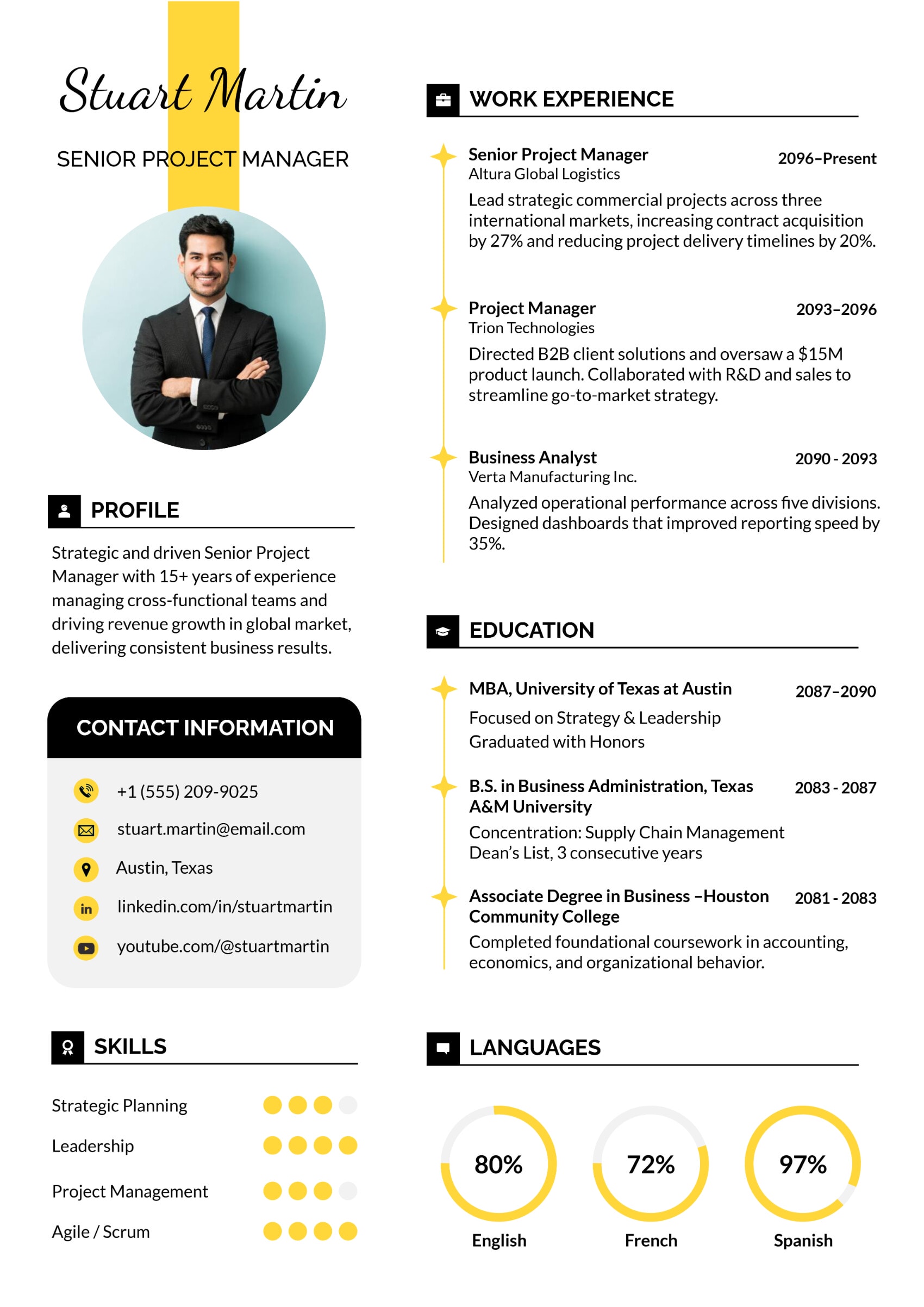
Creating a resume is often the first step in the job search process, and how you present your information can influence how it’s received. A resume serves as a summary of your experience, qualifications, and skills and it gives potential employers an initial understanding of what you can contribute to their team.
A well-structured resume is especially important in competitive fields, where hiring managers may only spend a short time scanning each application. Using a clear format with relevant headings and consistent layout can help ensure that your key information is seen and understood.
These templates can support a range of needs:
Entry-level roles: When you’re applying for your first job or internship
Experienced professionals: To organize years of experience without overwhelming the reader
Career changers: To highlight transferable skills and relevant achievements
Industry-specific roles: Where formatting or content expectations may vary (e.g. tech, healthcare, finance)
Regardless of your field or career stage, a resume typically includes the following components:
Contact information: Your name, phone number, email address, and optional LinkedIn profile or portfolio link
Professional summary or objective: A brief statement outlining your goals or core qualifications
Work experience: Positions held, responsibilities, achievements, and dates of employment
Education: Degrees, institutions, graduation years, and certifications if applicable
Skills: Technical, language, or job-specific skills that align with the role
Optional sections: Projects, volunteer work, publications, or awards depending on relevance
While content is the most important part of any resume, how that content is organized and presented also plays a role in how it’s perceived. A resume that’s easy to follow, free of clutter, and visually consistent can support the impression of professionalism and attention to detail.
Before submitting your resume, it’s a good idea to update the language, remove outdated roles, and align your experience with the job description. Using a thoughtfully designed template can make that process easier by giving you a framework that keeps everything in order, so you can focus on what you want to say.
A resume is a concise document that summarizes your work experience, education, and skills for a specific job. A CV (curriculum vitae) is typically longer and more detailed, often used for academic, research, or international positions.
You don’t necessarily need a different resume each time, but you should revise the content. You can use the same template and adjust your summary, experience, and keywords to match each job posting.
Make sure contact info is current
Remove any placeholder text or outdated roles
Check grammar, spelling, and formatting consistency
Match keywords to the job description
Save it in the correct file format (PDF unless stated otherwise)
Maintain a master version and update it whenever your experience, skills, or certifications change. Make new copies for each job application, with keywords and content aligned to the role.


